A prosthetic limb does one thing: it extends what a person can do. Fitted well, powered, and used every day, it gives back reach, speed and independence. Left in a cupboard, it does nothing at all.
Technology works the same way, for every country. A phone extends your voice across the country. A spreadsheet extends your memory. An automated invoice extends your working day. None of it matters until it is actually in use. Nigeria's problem today is less about access to technology than about use: much of the country already has the limb, and it is not being used.
The signal is there. The users are not.
The clearest number comes from the GSMA, the global body for mobile operators. In its State of Mobile Internet Connectivity 2026 report, it estimates that 140 million Nigerians live within reach of a mobile broadband network but do not use mobile internet. That "usage gap" was 120 million in 2023. It is growing, not shrinking.
Other counts point the same way:
- Internet users: DataReportal counts 109 million internet users at the end of 2025, 45.5% of a population of about 239 million. Roughly 130 million people remain offline.
- Phones versus people online: there are 165 million active mobile connections, equal to 69.2% of the population. Phones are everywhere; people online are not.
- Broadband target: the Nigerian Communications Commission (NCC) reports that broadband penetration only crossed 50% in November 2025. The National Broadband Plan 2020–2025 had set a target of 70% by the end of 2025. That plan has now expired with the target missed.
In other words, the towers are largely up. Building more of them is not what closes the gap.
Fitted, but not powered
A prosthetic without power is dead weight. Technology without electricity is the same.
The World Bank's Tracking SDG 7: The Energy Progress Report 2025 found that 86.8 million Nigerians had no access to electricity in 2023. That is the largest electricity access deficit of any country in the world, for the third year running. Only 61% of the population had access at all.
For businesses, power shapes every other decision. In PwC's 2024 survey of Nigerian small businesses, poor electricity was the second-biggest obstacle to growth (21% of respondents), behind only access to finance. More than 60% said they struggle with high electricity costs. A business that is spending on diesel to stay open is not spending on software.
Where Nigeria does use it, it uses it hard
This is not a story about Nigerians resisting technology. When a tool is useful, affordable and simple, adoption is fast.
Instant bank transfers are the proof. The Nigeria Inter-Bank Settlement System (NIBSS) processed ₦1.07 quadrillion in instant payments in 2024, up 78% from ₦600.36 trillion in 2023. Mobile money operators such as OPay, Palmpay and Moniepoint handled 3.91 billion transactions worth ₦79.5 trillion in the same year.
Financial access has followed. EFInA's latest Access to Financial Services survey, published in September 2026, puts financial inclusion at 79% of adults, with 25.1 million still excluded.
So the limb works, and people will use it. The question is why that energy stops at payments.
The businesses carrying the economy are the least equipped
Nigeria's micro, small and medium enterprises are the economy. The national MSME survey by the National Bureau of Statistics and SMEDAN (fieldwork in 2020, published in 2022) counted 39.7 million MSMEs, contributing 46.3% of GDP. Micro businesses alone made up 96.9% of all businesses.
These are exactly the businesses where technology is still an add-on:
- Cash still dominates. Moniepoint's 2025 Informal Economy Report found that cash still makes up 51% of transactions in the informal economy.
- Digital revenue is thin. Only 1 in 4 informal businesses earn even 10% of their revenue digitally.
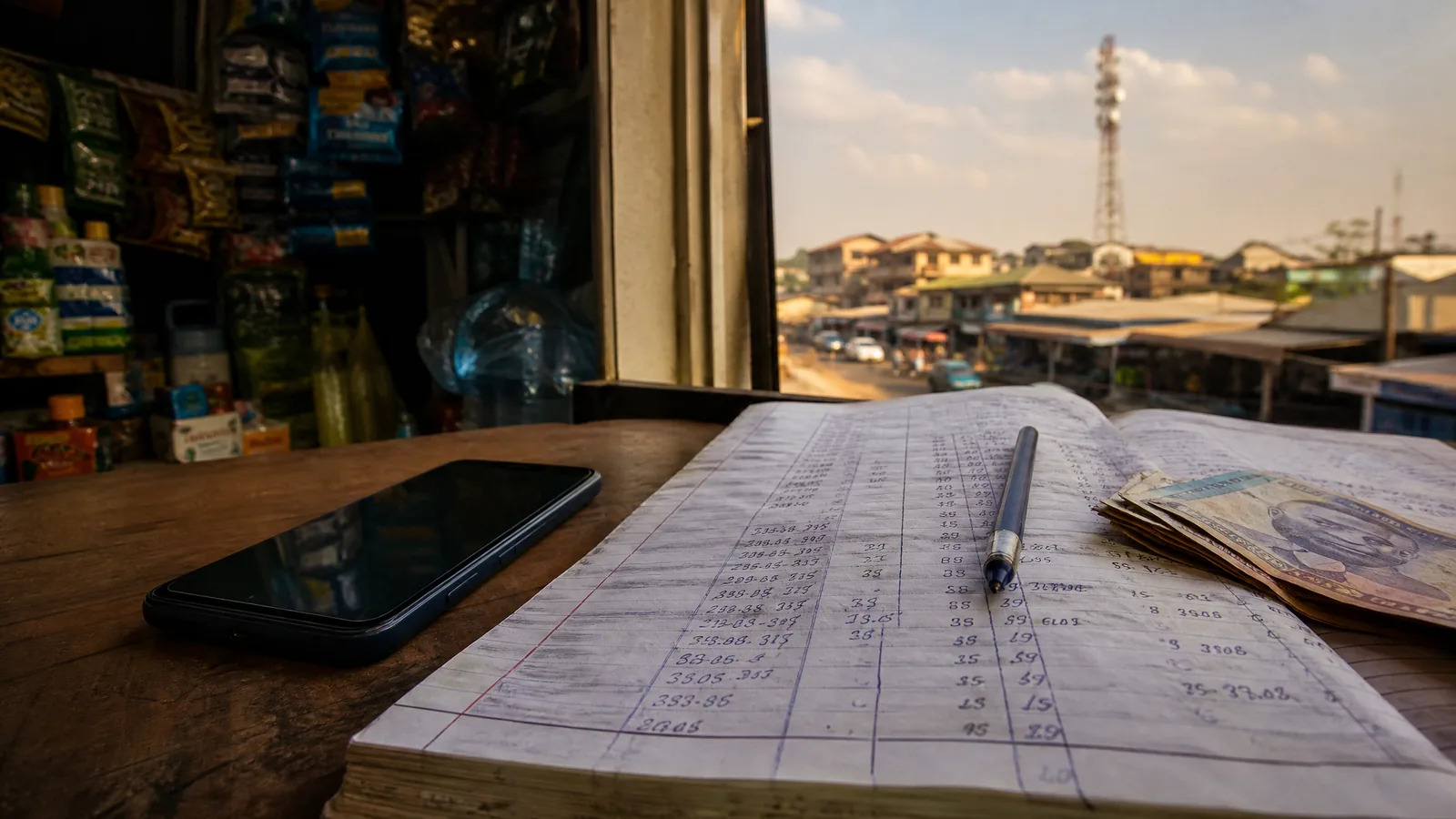
- Payments are not operations. Receiving a transfer is not the same as running the business on technology. Stock, records, customer follow-up and scheduling mostly still live in notebooks and people's heads.
Meanwhile, the ICT sector itself contributed 10.59% of real GDP in the first quarter of 2025, according to the NBS. The technology industry is growing. The rest of the economy is not yet leaning on it.
The gap is widest where it would help most
The GSMA figures show how uneven this is. In urban Nigeria, 66% of people use mobile internet; in rural Nigeria, 33%. Ownership of an internet-capable phone follows the same split: 79% urban against 51% rural.
Awareness is not the problem. 86% of rural Nigerians already know what mobile internet is. The barriers the GSMA points to are affordability, safety and security concerns, and the quality of the connection people actually get.
Skills are harder to measure, and that is part of the problem. NITDA has set a target of 70% digital literacy by 2027, but there is no agreed national measure of what digital literacy means or how many people have it today. A target without a baseline is difficult to track.
Good policy, slow use
Nigeria is not short of plans. In Oxford Insights' Government AI Readiness Index 2025, Nigeria ranked 72nd of 188 countries and fourth in sub-Saharan Africa. It ranked 35th globally for policy capacity. The strategies, programmes and targets exist.
The weak link sits further down: in the office where invoices are still typed twice, in the shop where the stock count lives in a notebook, and in the phone that is only ever used for calls and transfers.
Putting the limb to work
None of this is solved by buying more technology. It is solved by using what is already in reach, one real problem at a time. Some practical starting points:
- Start with the process that costs the most hours. Pick one repeated task, such as re-entering orders, chasing payments or reconciling stock, and fix that first. One working automation teaches a team more than a new platform.
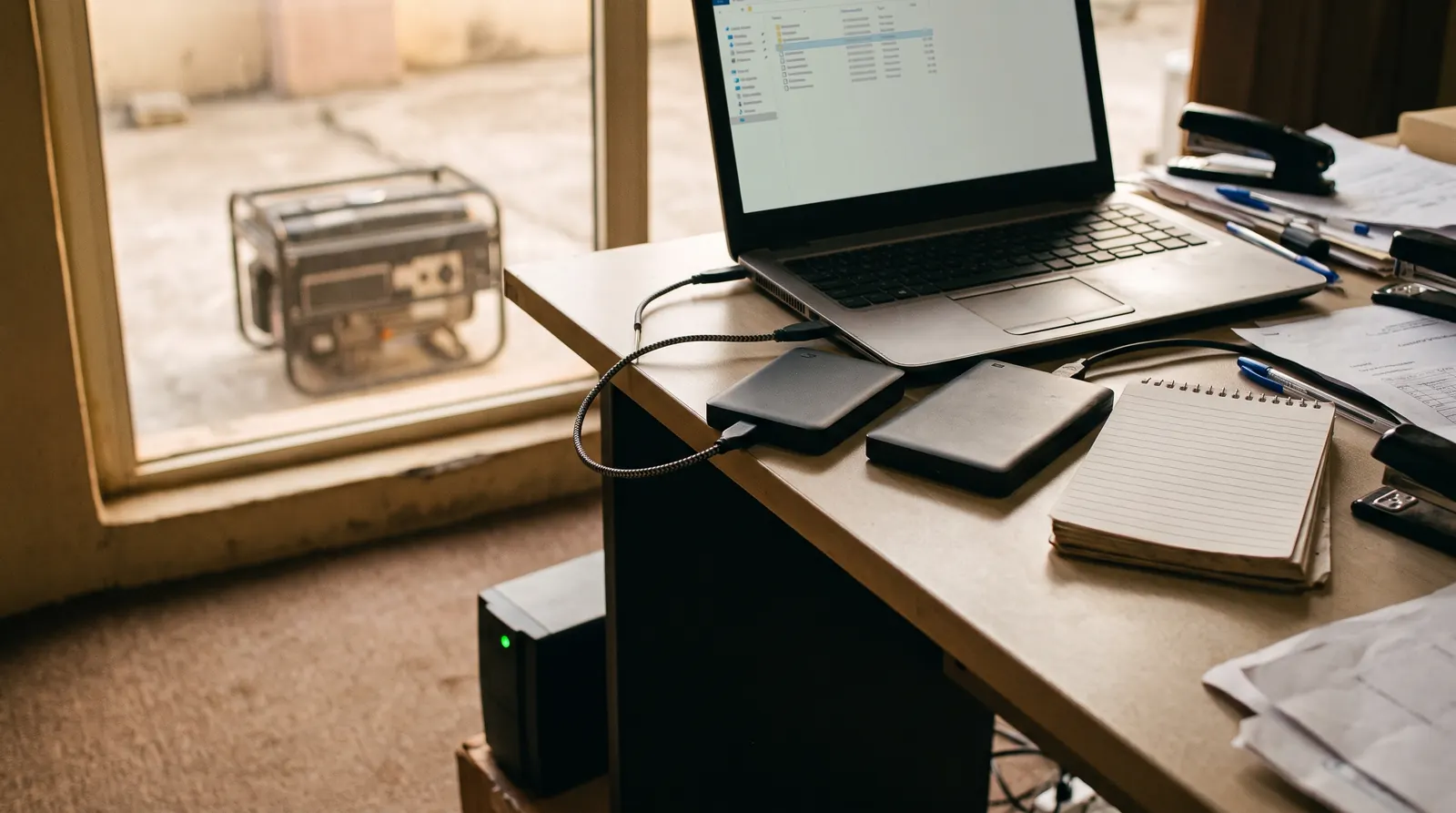
- Design for unreliable power and data. Choose tools that work offline and sync later, and plan backups around the generator schedule. Assuming constant power is how projects fail in Nigeria.
- Use what people already trust. Transfers and phone-based tools already have Nigerians' confidence. Build on them before introducing anything unfamiliar.
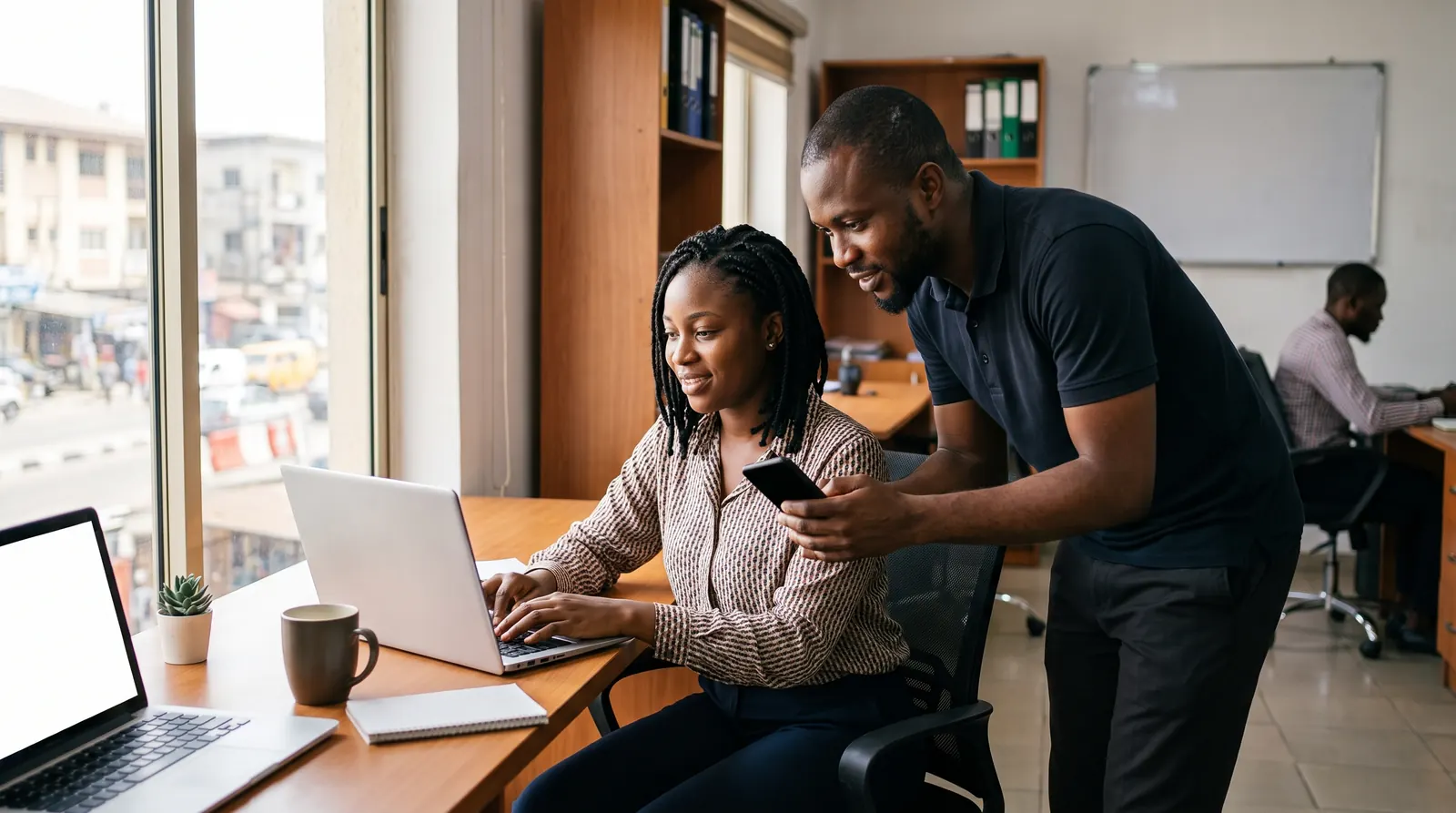
- Train the person who will use it, not just the person who bought it. A tool that only one staff member understands leaves with that staff member.
- Measure before and after. Hours saved, errors avoided, cash collected. If the numbers don't move, the technology isn't helping, however modern it looks.
Nigeria's challenge for the next decade is not access to technology. It is turning 140 million people who are within reach into people who are online, and turning tens of millions of businesses that take transfers into businesses that run on technology. The limb is already fitted. Now it has to be used.
Sources
- GSMA, State of Mobile Internet Connectivity 2026, as reported by Nairametrics (17 Sep 2026)
- DataReportal, Digital 2026: Nigeria
- NCC broadband data for November 2025, as reported by Techeconomy
- World Bank et al., Tracking SDG 7: The Energy Progress Report 2025, Nigeria figures as reported by Vanguard (June 2025)
- PwC Nigeria, MSME Survey 2024
- NIBSS instant payment figures for 2024, as reported by Vanguard (Jan 2025)
- EFInA, Access to Financial Services in Nigeria survey, as reported by The Whistler (Sep 2026)
- NBS and SMEDAN national MSME survey, as reported by Daily Trust
- Moniepoint, 2025 Informal Economy Report, as reported by TechCabal (Oct 2025)
- NBS GDP report for Q1 2025, as reported by Premium Times
- NITDA digital literacy target, as reported by Technext (Aug 2025)
- Oxford Insights, Government AI Readiness Index 2025, as reported by Channels TV (Jan 2026)